Paleolithic stone tools of Khovd River Valley: A techno-typological study from the surface collection
Keywords:
open-air site, core, pebble tools, raw material, artifact, reduction techniqueAbstract
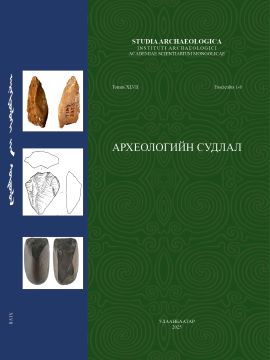
The Khovd River - the largest fluvial system originating from the glaciers of Altai Tavan Bogd peak of the Mongol Altai Mountains - played a significant role in the geomorphology and paleoenvironment of western Mongolia. Its extensive drainage basin encompasses broad intermontane valleys, gorges, and tectonic depressions situated between the high-altitude mountain ranges of the region. The area's distinctive geological features, coupled with an abundance of diverse lithic resources, created an ecologically favorable setting for prehistoric human occupation which facilitated early technological and subsistence adaptations. Archaeological surveys conducted in the eastern part of the Mongol Altai Mountains have resulted to the discovery of numerous Stone Age sites. The majority of these sites are associated with the Upper Paleolithic period. These sites predominantly represent open-air sites, where lithic artifacts are distributed across the surface. This article presents the results of an analysis conducted on 53 lithic artifacts recently collected from the lower mouth of the Shijigt Gorge and the eastern bank of the Khovd River, located in Myangad soum, Khovd province. The artifacts contribute to the broader understanding of Paleolithic technological organization and raw material utilization in the region. When classified according to traditional methods of lithic analysis, the collected assemblage can be divided into two primary categories: core reduction (n=8 specimens) and tool production (n=45 specimens). Our observations indicate that early stone tool makers utilized locally abundant raw materials found in the river basin, including siliceous rocks, silicified sandstone, and pebbles, to manufacture their tools. A comparative analysis of the lithic assemblage also suggests that the artifacts can be chronologically attributed to a temporal span ranging from the late Lower Paleolithic to the late Upper Paleolithic period.
635
Downloads
Published
How to Cite
Issue
Section
License
Copyright (c) 2025 Guunii Lkhundev

This work is licensed under a Creative Commons Attribution-NonCommercial 4.0 International License.
Copyright on any research article in the Studia archeologica is retained by the author(s).
The authors grant the Studia archeologica license to publish the article and identify itself as the original publisher.

Articles in the Studia archeologica are Open Access articles published under a Creative Commons Attribution-NonCommercial 4.0 International License - CC BY NC.
This license permits use, distribution and reproduction in any medium, provided the original work is properly cited.