The significance of Tsagaan Agui in Mongolian Paleolithic Archaeology
Keywords:
Tsagaan Agui, Paleolithic, Gobi Desert, Gobi Altai Mountains, MongoliaAbstract
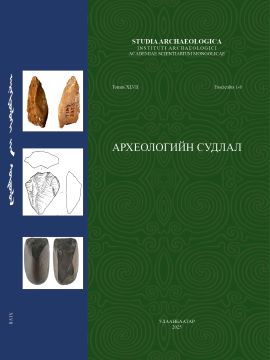
Tsagaan Agui (White Cave; Цагаан Агуй), located in the Gobi Altai Mountains of southern Mongolia, represents one of the few stratified and well-dated Pleistocene archaeological sites now known in the Gobi Desert. Archaeological studies undertaken at Tsagaan Agui since 1995 have revealed that the cave’s sediments contain cultural remains ranging from the Middle and, possibly, Lower Paleolithic, to the later historic period. Analyses of these deposits suggest environmental conditions favorable for intermittent human occupation existed throughout most of the Pleistocene and early to middle Holocene, the latter likely during periods of larger-scale climatic and environmental degradation.
1099
Downloads
Published
How to Cite
Issue
Section
License
Copyright (c) 2025 John W. Olsen

This work is licensed under a Creative Commons Attribution-NonCommercial 4.0 International License.
Copyright on any research article in the Studia archeologica is retained by the author(s).
The authors grant the Studia archeologica license to publish the article and identify itself as the original publisher.

Articles in the Studia archeologica are Open Access articles published under a Creative Commons Attribution-NonCommercial 4.0 International License - CC BY NC.
This license permits use, distribution and reproduction in any medium, provided the original work is properly cited.